Electrical finish problem
Why is my socket recessed after plastering?
A socket or light switch that sits too far back after skimming usually points to the finished wall depth, the back-box position or an uneven surface. Work out the cause before tightening the faceplate.
Diagnosis and next steps
Work out whether the problem is depth, alignment or the wall finish.
- 01
Do not force the faceplate flat
If the plate is loose, bent or sitting under strain, do not keep tightening the screws to pull it into the wall. Isolate the relevant circuit before the accessory is loosened or inspected.
- 02
Check what is actually out of line
Look at the gap around all four sides. A plate recessed evenly is different from one that rocks on a high spot, tilts because the box is out of level or sits beside damaged plaster.
- 03
Compare the box with the finished surface
A fresh skim adds depth, while plasterboard, drylining and dot-and-dab systems can move the final wall face much further forward. The back box and fixing screws must suit that completed build-up.
- 04
Have the electrical correction chosen for the installation
Depending on the box, accessory and wiring space, a competent electrician may adjust the box position or use a suitable extension method, spacer or fixing arrangement. The correct remedy depends on the actual installation.
- 05
Repair loose plaster separately
If the edge has cracked or crumbled, make the background sound before refitting the accessory. A faceplate should not be used to clamp a weak plaster edge back into place.
- 06
Prevent the problem before the next skim
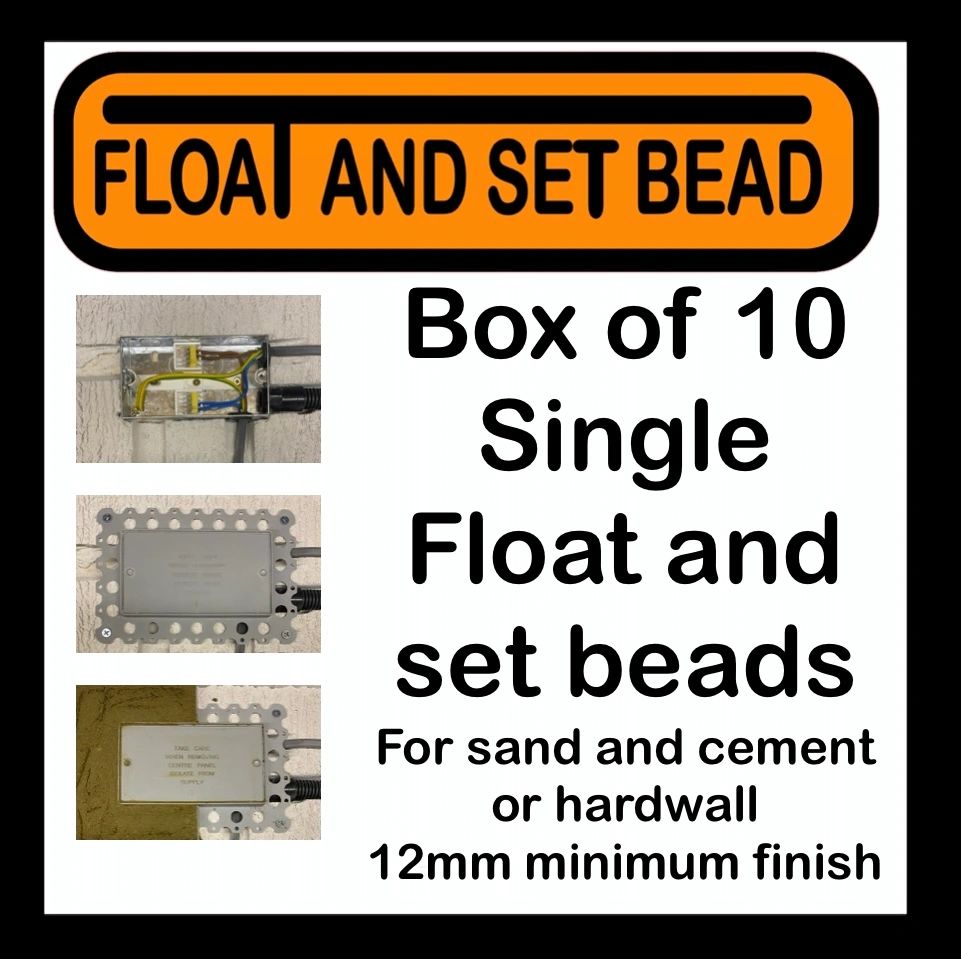
Agree the finished wall line at first fix, check the box depth before plastering and use the correct socket bead to give the finishing trade a defined edge around the opening.
See the planned method